
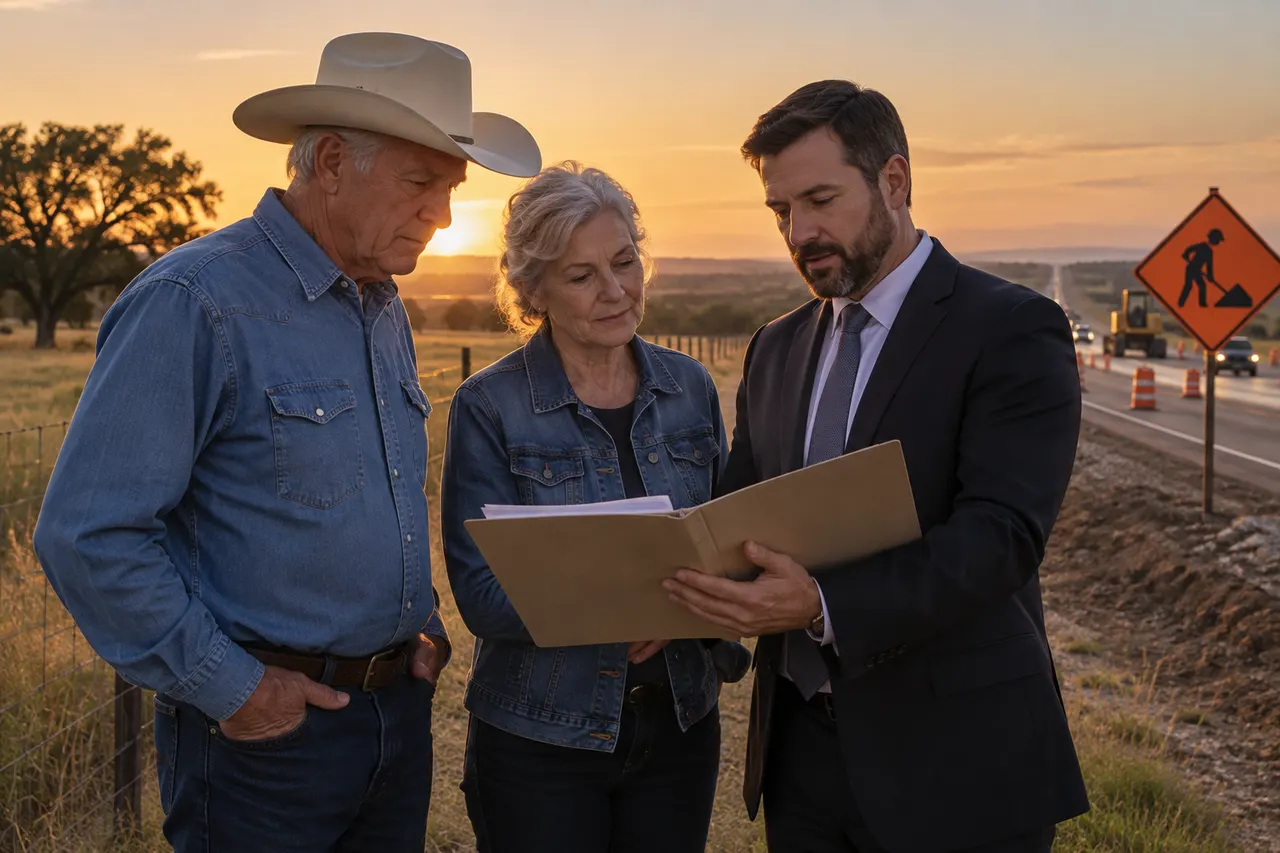
A highway project can change a family’s relationship with its land overnight. A strip of pasture becomes right-of-way. A planned entrance moves. Then, years later, the road is redesigned and a portion of the condemned property is no longer needed.
What happens to the land?
In The State of Texas v. JRJ Pusok Holdings, LLC, the Texas Supreme Court considered whether JRJ Pusok Holdings, as assignee of the former landowners’ rights, could pursue a statutory claim to repurchase property acquired for a highway project after the State later treated part of it as surplus.
The Court held that sovereign immunity did not prevent the repurchase claim from proceeding and affirmed the court of appeals’ judgment.
The hidden legal mechanism
Eminent domain is powerful, but it is not unlimited. Texas may acquire private property for a public use, subject to constitutional protections and payment of adequate compensation.
Texas Property Code Chapter 21 also recognizes a repurchase right in defined circumstances. If property acquired through condemnation later becomes unnecessary for the public use, the former owner - or certain heirs, successors, or assigns - may have a statutory opportunity to buy the property back.
The statute is procedural as well as substantive. It includes notice requirements and deadlines that depend on the applicable notice and circumstances. A former owner should have counsel review them promptly.
The State argued that sovereign immunity barred JRJ’s claim. The Supreme Court rejected that argument, explaining that Chapter 21’s repurchase provisions are part of Texas’s comprehensive eminent-domain scheme and provide a statutory path for resolving the dispute.
Free Guide
Texas Estate Planning Checklist
12 steps every Texas family should take to protect their legacy
That does not mean every former landowner automatically gets property back. The statutory conditions still matter: how the property was acquired, whether the public use changed, whether the property qualifies as surplus, who owns the repurchase right, and whether the required notices and deadlines were followed.
What property owners should do
If a condemning authority changes a project, do not rely on informal statements that “the land is no longer needed.” Preserve the paper trail.
Property owners should:
- Keep the original deed, condemnation documents, settlement, and payment records.
- Track project changes, revised maps, and surplus-property notices.
- Confirm the exact legal description of the affected tract.
- Identify who currently holds the repurchase right.
- Calendar every statutory response deadline.
- Obtain written confirmation of the acquiring entity’s position.
- Have counsel review whether the property qualifies under Chapter 21.
The practical lesson from JRJ Pusok is that condemnation does not necessarily end every future property right. When the public use changes, the statute may create a second legal question: whether the former owner has a path back to the land.
WG Law helps North Texas property owners evaluate title, easement, condemnation, and real-estate issues before deadlines or negotiations narrow their options.
This article provides general legal information, not legal advice, and does not create an attorney-client relationship. Texas law and individual circumstances can affect the result.