
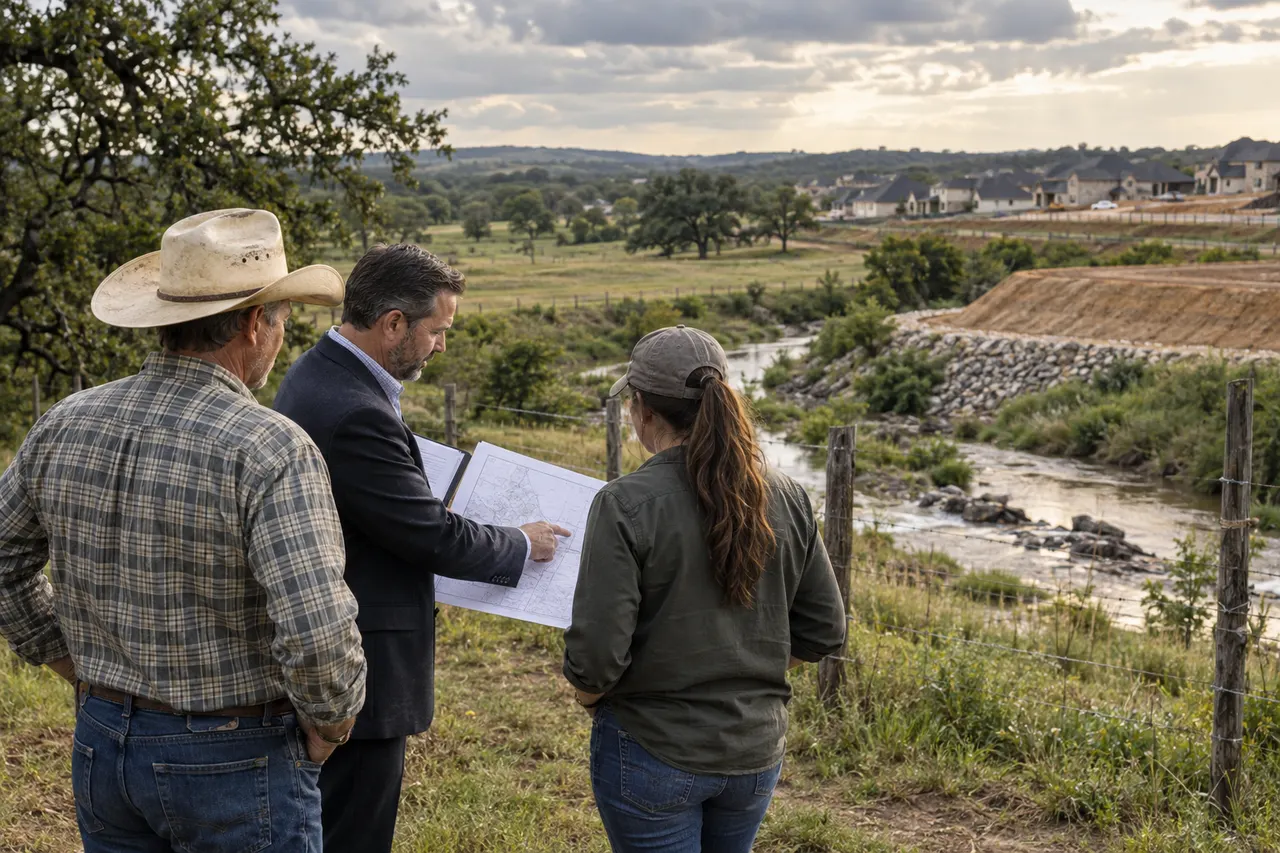
A fence line can look permanent. Water does not recognize it.
That became painfully clear in K&K Inez Properties, LLC v. Kolle, a dispute between neighboring Victoria County landowners. The Kolles owned approximately 126 acres where they grazed cattle. The neighboring owners developed their tract into a residential subdivision and constructed a dam and berms.
The Kolles alleged that the construction changed the creek’s flow and caused water to flood their property. A jury found liability under several theories, including nuisance and gross negligence, and awarded economic and exemplary damages.
The case eventually reached the Texas Supreme Court - not primarily to decide whether every drainage change creates liability, but to determine how Texas’s exemplary-damages cap should operate when multiple defendants are involved.
The hidden mechanism: liability and damages are different questions
Property owners often focus first on whether a neighbor’s construction caused physical harm. That is important, but it is only one part of a potential dispute.
A court may separately ask:
- Was there a legally actionable interference with the property?
- Did the construction actually cause the claimed damage?
- Which defendant was responsible for which portion?
- Are the damages economic, noneconomic, or exemplary?
- Does a statutory damages cap apply?
In Kolle, the Supreme Court addressed the last two questions. The Court held that Texas Civil Practice and Remedies Code § 41.008’s exemplary-damages limitation must account for the percentage of economic damages attributable to each defendant. When co-plaintiffs jointly own property and receive one joint economic-damages award, the cap is applied using that single award - not by multiplying the total award separately for every defendant.
The Court reversed part of the lower-court judgment and remanded for further proceedings, including proper allocation of exemplary damages and consideration of whether the awards were excessive after the economic-damages reduction.
The decision does not mean that a property owner automatically wins a flooding claim whenever nearby development changes drainage. It illustrates something more practical: proving a property injury and calculating a legally available remedy require separate evidence and analysis.
What property owners should document
Free Guide
Texas Estate Planning Checklist
12 steps every Texas family should take to protect their legacy
When drainage or flooding changes after construction, the earliest evidence may become the most valuable.
Property owners should consider preserving:
- Dated photographs and videos before, during, and after construction
- Survey information, elevation data, drainage maps, and floodplain records
- The timing of grading, berm, culvert, detention-pond, or road work
- Communications with developers, cities, counties, or homeowners’ associations
- Repair invoices and records of crop, livestock, rental, or use-related losses
- Reports from qualified engineers or hydrologists
Developers should likewise preserve their drainage studies, permits, construction plans, inspection records, and communications concerning downstream effects.
A title search or deed review may also reveal easements, drainage rights, restrictive covenants, or maintenance obligations that affect the dispute. But those documents rarely answer the entire causation question by themselves.
A practical warning
Do not respond by unilaterally digging channels, blocking culverts, moving dirt, or redirecting water onto another parcel. Those actions can create new liability and may destroy evidence about the original condition.
Instead, identify the affected property boundaries, preserve the physical evidence, obtain qualified technical advice, and have counsel evaluate the relevant deeds, easements, permits, ordinances, and possible claims.
WG Law helps North Texas families with real estate. Contact us to discuss your situation.
This article provides general legal information, not legal advice, and does not create an attorney-client relationship. Texas law and individual circumstances can affect the result.